
Thoughts on the Atlanta Mecca

For years I attended Muslim conventions in Chicago and Detroit over the Christmas holiday. It's difficult to imagine cities any worse to be in late December other than perhaps Minneapolis, Boston, and Buffalo. I always asked they question, “can we do this in Miami or LA?”. Thankfully for me, the annual convention of Indonesian Muslims in the US was held in Atlanta this year and it was in the 60’s and 70’s the whole time.
I actually didn't attend much of the convention. I figure that my brain topped out on religious lecture years ago. Occasionally, such as when Ubaydullah Evans visited St. Louis, I'll make an exception. We already get a weekly mandatory religious lecture at Jummah. Of course, some of our imams are auditioning for political pundit roles on cable news networks, so, I guess it doesn't always count. I did manage to pop my head into a few lectures and listen here and there, but the main purpose of me accompanying my wife to this convention was to just hang out in Atlanta.
My first memories of Atlanta are thanks to sports. Watching wrestling on WTBS every Saturday when I had access to cable. This was the NWA, Jim Crockett’s Mid Atlantic promotion to be exact, and the competitor to the dominant WWF, which, at the time, Vince McMahon was seeking to turn into a pro wrestling monopoly (he would eventually succeed). The matches were held in the WTBS studios in Atlanta and during the broadcast they'd promote live arena shows in places such as The Omni in Atlanta, The Scope in Norfolk, Charlotte, and Greensboro. The Fabulous Freebirds, who I first knew from their work in World Class in Dallas, were hailed as being from “Bad Street, USA” in Atlanta, GA. Most importantly, it was during these shows, where Ric Flair and Dusty Rhodes would engage in some of the most famous mic work in the history of the business.
In the 80’s, Atlanta was also the home to the lowly Atlanta Braves. Take away Dale Murphy and Braves fans didn't have much to cheer about. WTBS broadcasts often showed a Fulton County Stadium that was damn near empty.
During the 50’s my grandpa worked for a company in St. Louis that built and repaired street cars. He described being sent to the fast paced Philadelphia and being called a southerner. Then going to the sleepy city of Atlanta, which was a podunk town compared to St. Louis, and being called a yankee. Can't win.
The Atlanta of today has long since passed St. Louis by leaps and bounds. It's a major American city, has hosted the summer Olympics, has the busiest airport in the world, is one of the leading economic engines of the country, and is upbeat.
My friend P has a joke that “it never sounds right to me when someone white says they have a cousin. Cousins are for Black folks”. Similarly, in all of my years, I've never heard a single white person express to me the desire to move to Atlanta. Of course, there is humor in both of these observations, but the reality is far different. White people not only have cousins (fewer than in past generations and they may not know them very well, but they exist); but many move to Atlanta. In fact, the Atlanta of today is seeing rapid gentrification as the city and suburbs attact people for job opportunities and the annual influx of SEC and Southern school grads heading to Atlanta, Dallas, Austin, Nashville, and Charlotte.
Atlanta once erroneously promoted itself as “the city too busy to hate” to market itself away from the racist reputation Georgia had earned in the Civil Rights era. Shortly thereafter, it became known as the “Black Mecca”. The city that became a magnet for Black college grads from throughout the US. Others came as well, of course, not only Black college grads. Numerous Black kids I went to high school ended up moving to Atlanta, before Dallas and Houston became the preferred destinations. And, for Black New Yorkers, Atlanta effectively became the 6th borough along with Virginia and the Carolinas. The same could be said of Chicago, Detroit, Philadelphia, Cleveland, and other cities. Atlanta was, and for many, still is, the place to be.
This dynamic always meant that Atlanta would have a special place for Black Muslims. The Dallas suburbs are the hub for celebrity imams and capitalistic Muslim business adventures because South Asians are statistically into medicine, tech, and engineering, and the Dallas metro is a leading hub for all of these industries. Northern Virginia was the same type of Muslim hub in the 90’s, although not Desi dominated, because Muslims in the US were still financially dependent on foreign governments and donors. The money and appeal of living in a place comes first and then a community can flourish.
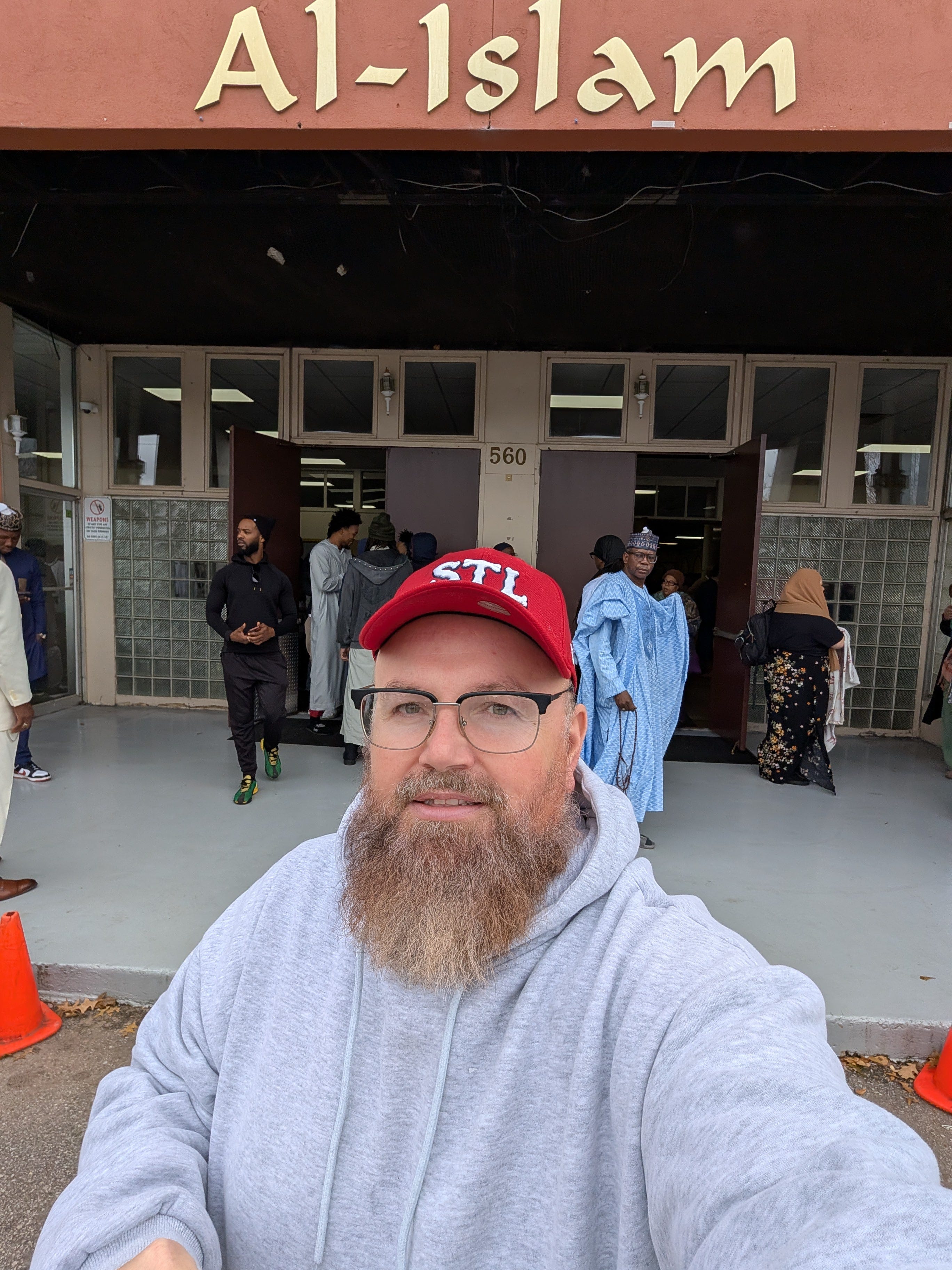
The Atlanta Masjid of al-Islam is flourishing as the leading masjid in the community of Imam Warith-deen Mohammed, as most of their masjids nationally are rapidly shrinking, aging, and in danger of closing. The other WD masjids that are flourishing are in places that are also Black magnets, DC and Houston, or in places where Islam generally is flourishing in the Black community, Philadelphia and Newark. The gentrification of Black Brooklyn had many unintended consequences, but one is definitely the weakening and shrinking of the Black Muslim community. Yet, Brooklyn’s loss, is the gain of Atlanta, Raleigh-Durham, Charlotte, and other Southern cities.
I attended Jummah at the Atlanta Masjid of al-Islam. It was actually an incredible experience and something to behold. My first stop was seeing Brother Bilal from St. Louis at the Heritage Halal Market. He gave me a tour and I ate some delicious and fresh halal beef brisket. The place is stocked with fresh Halal meats from Black Muslim owned farms, sausages, jerky, bean pies, and all variety of products. Unlike the majority of halal shops I've visited- Heritage Market is spotless and clean. Even the outdoor grill was glistening in the sun.
Next to the market there is a shared work space “Salaam Square”. Creatives and those needing an office can rent a space. The parking lot also contains a halal restaurant named Springreens (where I also ate, don't judge, after meeting Brother Todd from St. Louis), a law office, and a barbershop. There is also an outdoor souq/bazaar made up of vendors selling food, clothing, books, and more. I bought a few bean pies and a cheesecake.
There was a guest khatib name Enrique Rasheed. Turns out he was in Atlanta for the same reason as me- he's also married to an Indonesian sister and came for the convention. He delivered an excellent khutbah and in it I learned that he's from California, but he's living in Orlando. As I've contemplated moving to Florida, or really anywhere without winter, I made a note to talk to him afterwards, but I wasn't able to. It wasn't my first time to that masjid. I'd visited a few times in the nineties and at that time the imam was Plemon al-Amin. On my first visit to the masjid Imam al-Amin walked across the room to encourage me to continue attending the masjid and keep my mind open for new knowledge. I was a high school student at the time accompanying a brother from St. Louis going to Atlanta to get married and his words stuck with me.
Atlanta is home to several other majority Black American masjids, but I'm not sure any of them have the vibrancy, and Muslim village feel, that the Atlanta Masjid of al-Islam has. I'm actually not sure anywhere else in the US has that vibe with the possible exception of some places in Philly. It most reminded me of seeing Futon Street in Brooklyn for the first time when it was packed with Muslim vendors and brothers and sisters walking to and from the masjid and Muslim businesses giving salaams. Those days are passed. You'll now see more white transplants walking their dogs then you'll see Muslims on Fulton Street.
Famously, Atlanta was also the home of Imam Jamil al-Amin and his community (may Allah have mercy on him and forgive him of his sins). The ingredients came together for a community of Black Muslims to “buy the block” in Atlanta and create a community. This is something that has been talked about in many cities, including St. Louis, but actually done in Atlanta. Of course, maybe it took the leadership of Imam Jamil, but maybe it also took a desirable city for Black Americans interested in building a better future to move to. St. Louis, Chicago, Cleveland, Detroit, and other cities are often losing such people. Atlanta, Dallas, Houston, Charlotte, and other Southern cities have gained them. Yet, that doesn't explain everything. Islam is thriving in Black Philadelphia while the city is also experiencing reverse migration to the South and Dallas is a major Black magnet, but that isn't reflected in the Black Muslim community. There is something special about Atlanta. HBCU’s and the Divine Nine network, the legacy of Dr. King, and more.
On Christmas day in Atlanta I had a choice to make. Head to a kosher restaurant or check out the Asian area around Buford Highway. I changed my mind at the last minute and opted for Buford Highway and the surrounding area. There are countless Chinese, Korean, Vietnamese, Filipino, Indonesian, Bengali, and other Asian restaurants and businesses in this area. There are also Cuban, Colombian, Venezuelan, and Mexican owned businesses. When looking the area up I saw it had been promoted as one of the best culinary hubs in all of America.
I drove around for a bit and saw a lot of Asian American families walking in and out of restaurants. A lot of kids were playing in the parking lot. That's always the first sign of a healthy community. If there are no children, and if there aren't children who feel safe playing outside, then you don't have a healthy community. In many of our cities we now have neighborhoods without children or neighborhoods where parents are afraid to let them outside (St. Louis City is definitely in this category).
I finally settled on an Indonesian restaurant. The place was packed and it was mostly men eating by themselves. If this had been white guys or Black Americans eating my mind may have wondered. Divorced? Broken off relations with the family? Incels? On the run? Male loneliness crisis? As the restaurant was full of Asian men my assumption was they didn't celebrate Christmas. They were probably looking at me and asking themselves who is this fucking hoosier eating alone on Christmas? Of course, I have a ready made excuse, my wife was chilling with her Indonesian friends at the convention and I wanted to see the city. We later visited the area together to go to an Indonesian grocery store and a dessert shop. The area once again highlights that Atlanta isn't just the Black Mecca- it's a Mecca, period. The city and suburbs are diverse and growing.
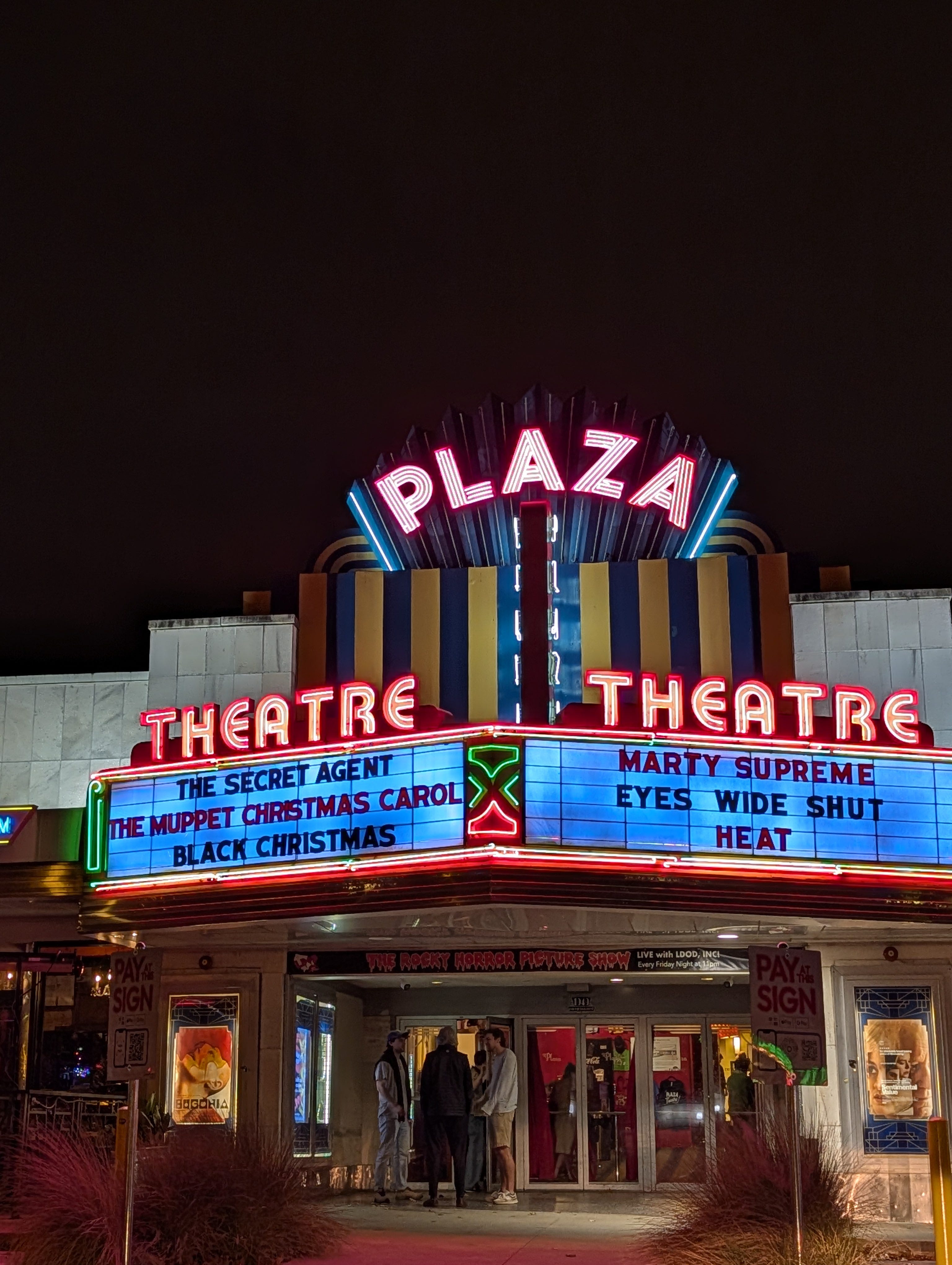
Other stops in Atlanta included the historic Plaza Theater, where I saw the excellent Brazilian film “The Secret Agent”, the President Jimmy Carter Museum and Library, and the Dr. Martin Luther King Jr. Historical Park and Dream Center, and the Al Faruq Masjid. When I was younger, and held a more provincial religious outlook, I wouldn't have included these visits. Now they're my primary motivation for travel.
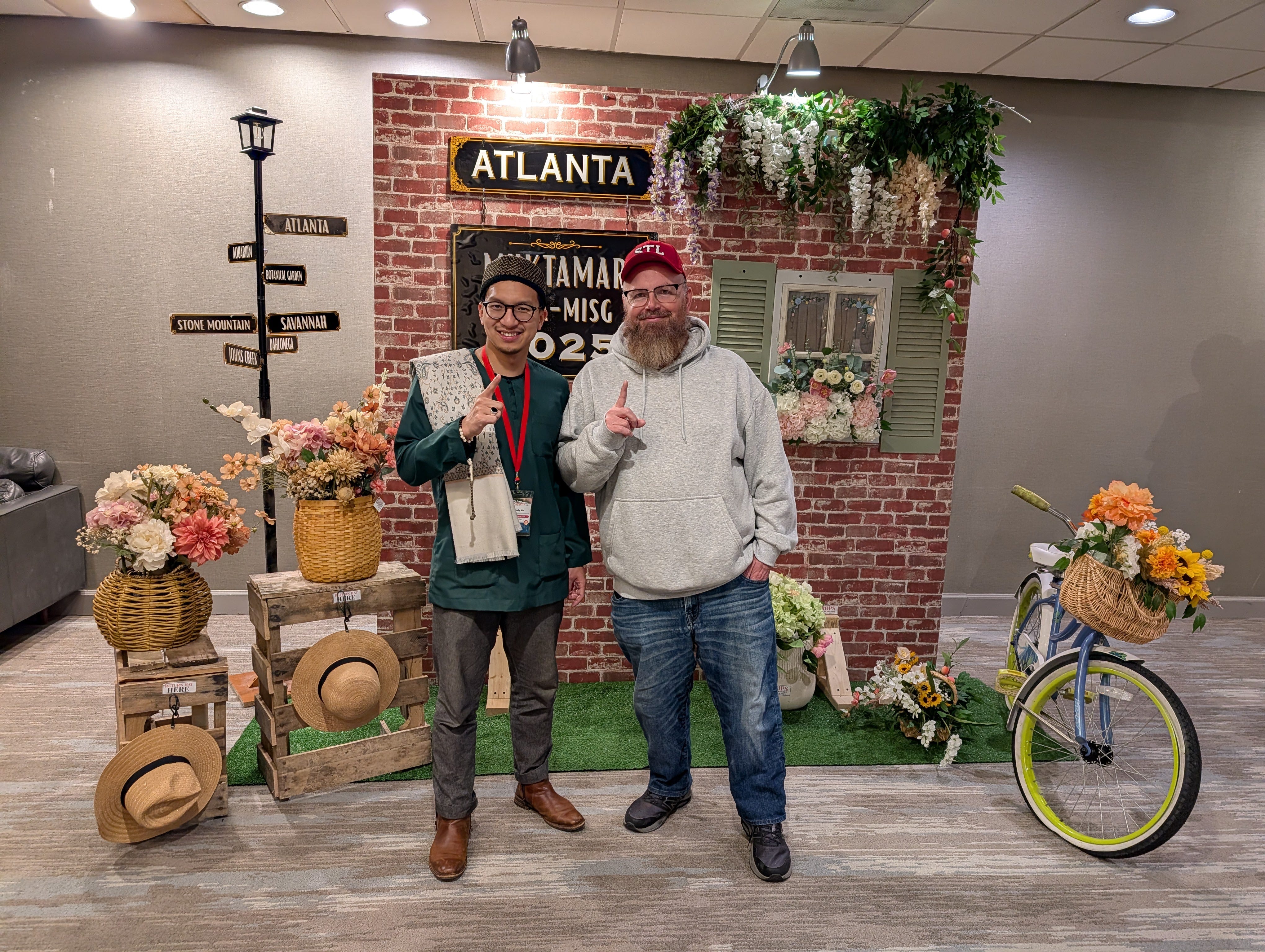
On my last night I spent more time at the convention and I'm glad I did. I met an Indonesian imam from LA and brothers from the DMV, Boston, Queens, San Francisco, and even Mississippi. I most especially appreciated meeting an enthusiastic young Muslim convert from Georgia named Andy. He comes from a family of Vietnamese immigrants and he had me on the edge of my seat for nearly an hour as he told me his life story and his conversion process. Street corner TikTok theatrics? A charismatic imam in the joint? An expensive seminar? None of these things. His initial attraction to Islam was because the Muslims he knew at school were nice, encouraged him in a positive way, and were there for him when needed.
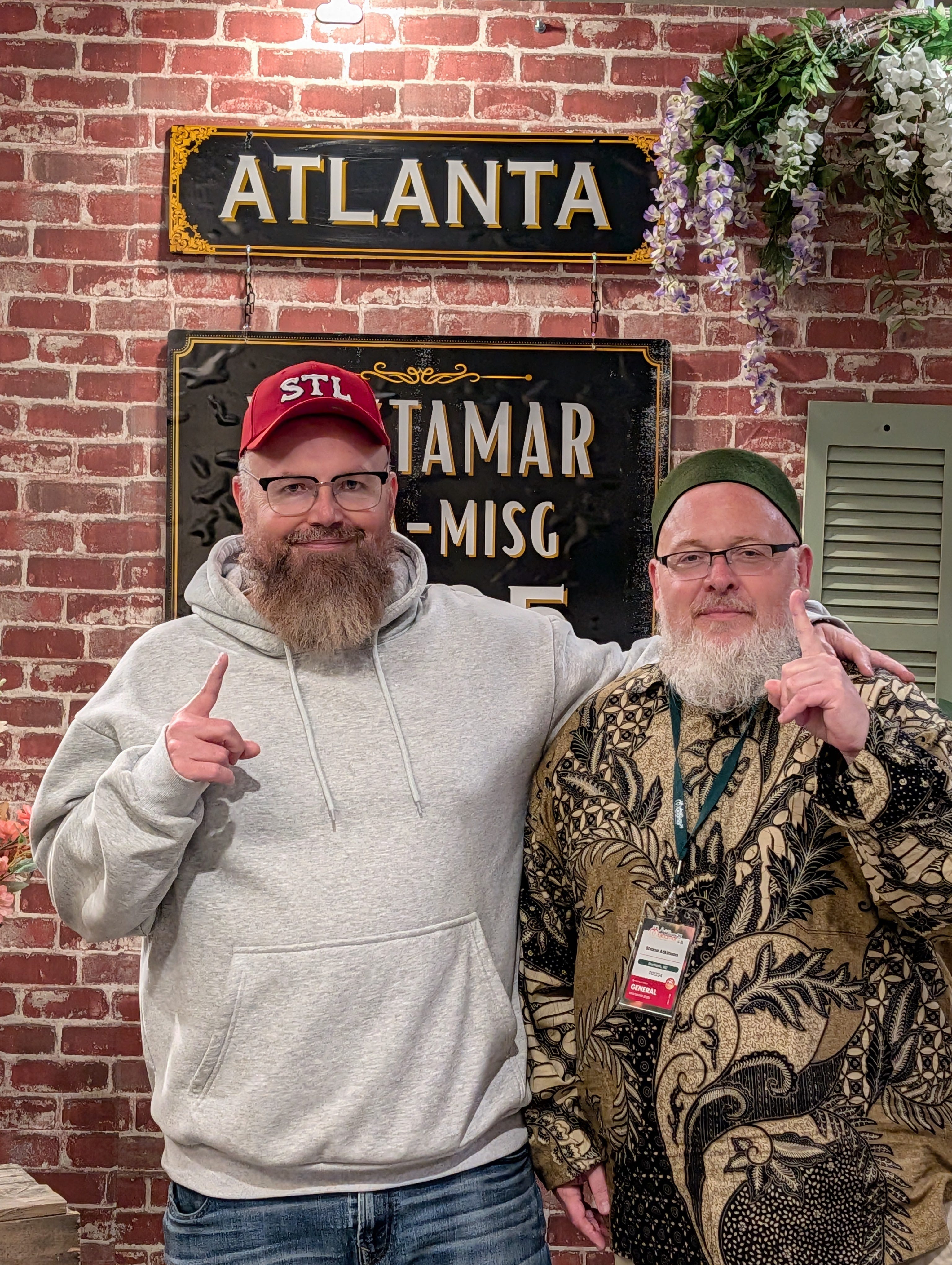
I also got the chance to meet Chaplain Shane Atkinson face to face. It was a pleasure as I've followed his work for a long time. He's from Mississippi and you can hear it as soon as he opens his mouth. The first thing he said to me was “I didn't know you were married to an Indonesian”. We discussed a variety of things, and shared an excitement for the recent podcast interview featuring Dr. Sherman Jackson, Imam Zaid Shakir, Ustadh Ubaydullah Evans, and Imam Hamzah Abdul-Malik. I described Hamzah as the imam you need at your masjid, Ubaydullah as the voice you need on life outside the masjid, Zaid as the holder of a legacy and institutional knowledge, and Dr. Jackson as the one who could place everything into a grander narrative informed by the wider body of academic study and human experience.
As always, it's a pleasure spending time with my Indonesian brothers and sisters and I look forward to doing so next year as well.
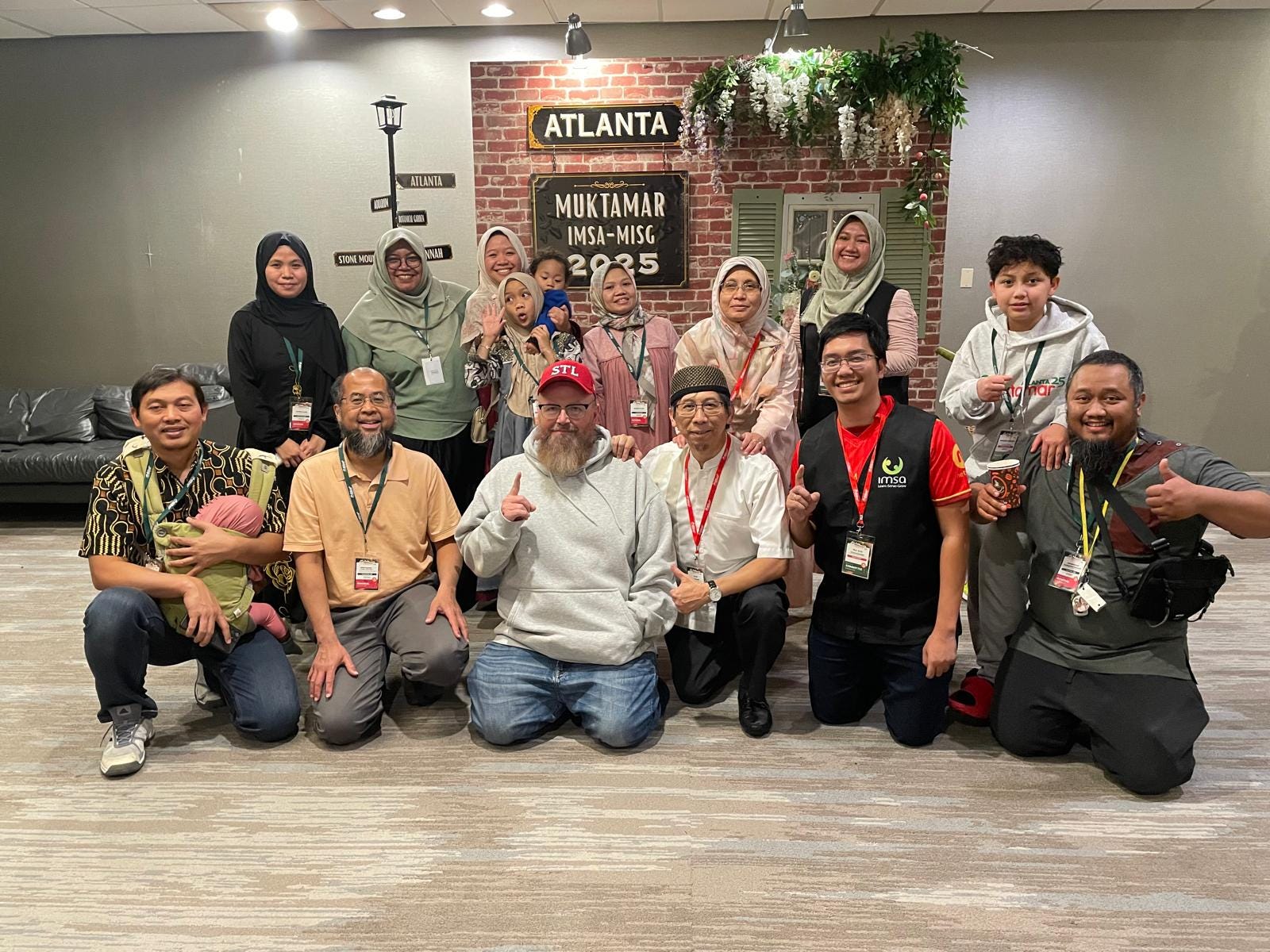
My audiobook companion driving to Atlanta was Stoner by John Edward Williams (thank you to all the smart young book and film accounts on Tiktok) and on the way back the classic “The Fight” by Norman Mailer.
Atlanta Masjid is really a special place. I've been fortunate to attend Jumuah there a few times. In fact, I just cited Atlanta Masjid at a Cincy Muslim program on Christmas Day -- our own local conference, if by conference you mean dinner & a lecture, but on the plus side it was 50s -- as an example of a community institution to aspire to! There's a new masjid coming up in Atlanta as well, I'm forgetting the name, but it's build to be among the greenest, most sustainable masajid in the US, with a really exciting vision & framework. I'll try to find more and send it over!
I was so excited to see this article, I tried to speed read through it but… There’s something special About Indonesians, just their presence saved me from going off a few times in Mecca and Madinah. Their Arab or aqlaq is way above the hosts’